
Most bad meetings are not caused by bad people. They are caused by a meeting that was never designed. Someone books an hour, writes three bullet points, and hopes the conversation goes somewhere useful.
A template fixes the design problem. It gives the meeting a shape before anyone walks in, which is usually the difference between a discussion and a decision. Below are templates grouped by the kind of meeting you are running, with guidance on how to actually use each one.
The board we use: most of our own sessions run on Miro. We have been paying customers for years, and for collaborative workshop and meeting work we think it is the strongest tool in the category. The other tools below are worth knowing about, and several have good templates, but Miro is the one we recommend if you are choosing where to start.
Planning a workshop or a longer session
Use these when the session is long enough that the sequence of activities matters more than the agenda items.
Workshop Session Plan Template
Miro Workshop Session Plan Template
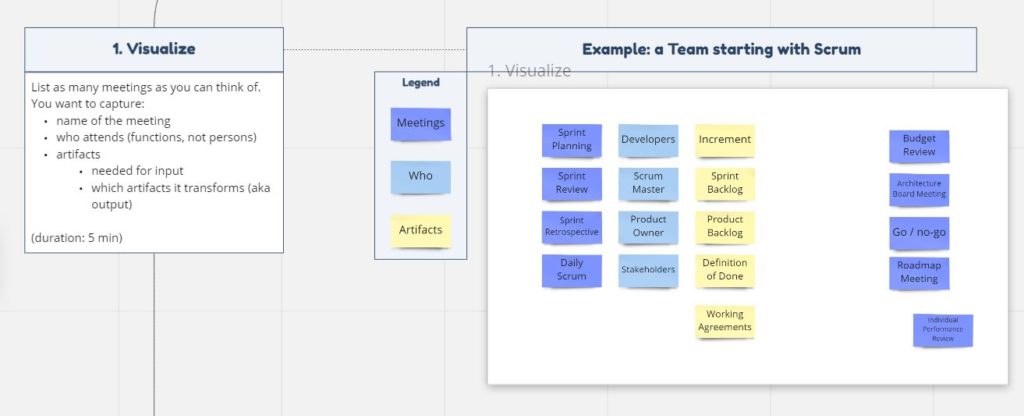
Provides a sequence of activities facilitators can follow through a session. Being able to zoom in and out across the stages helps a team see both the detail of an activity and the arc of the whole session.
How to use it. Fill in the timings before the content. Facilitators consistently plan more activity than will fit, and discovering that in the room costs you the closing conversation, which is the part that produces commitments. Build in at least fifteen percent slack.
The Perfect Remote Meeting Planning Template
Miro remote meeting planning template
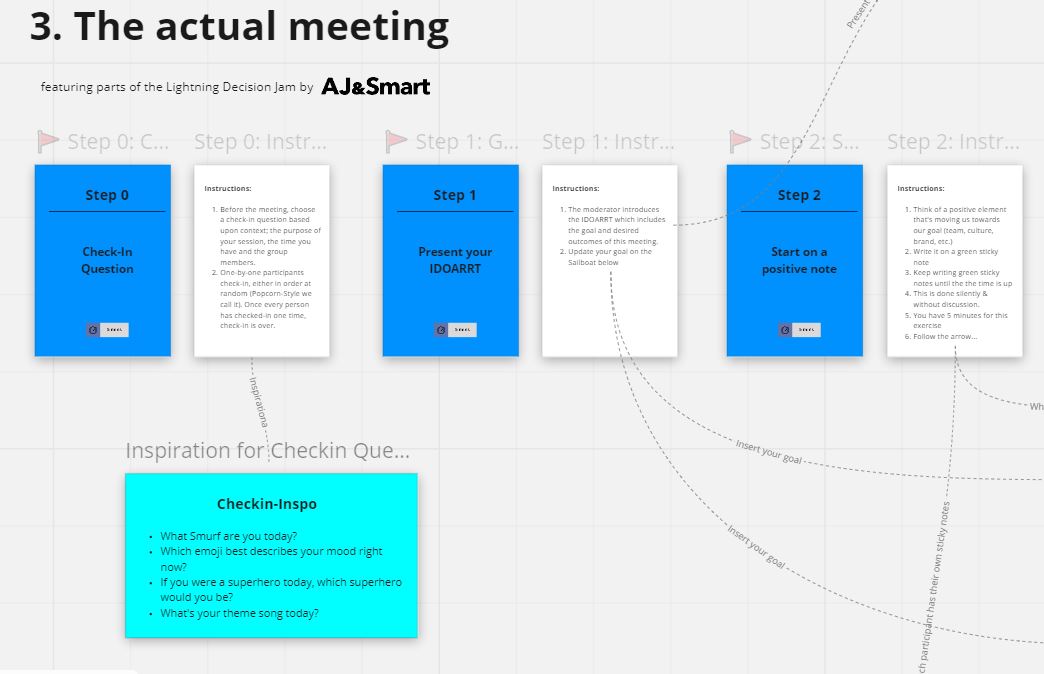
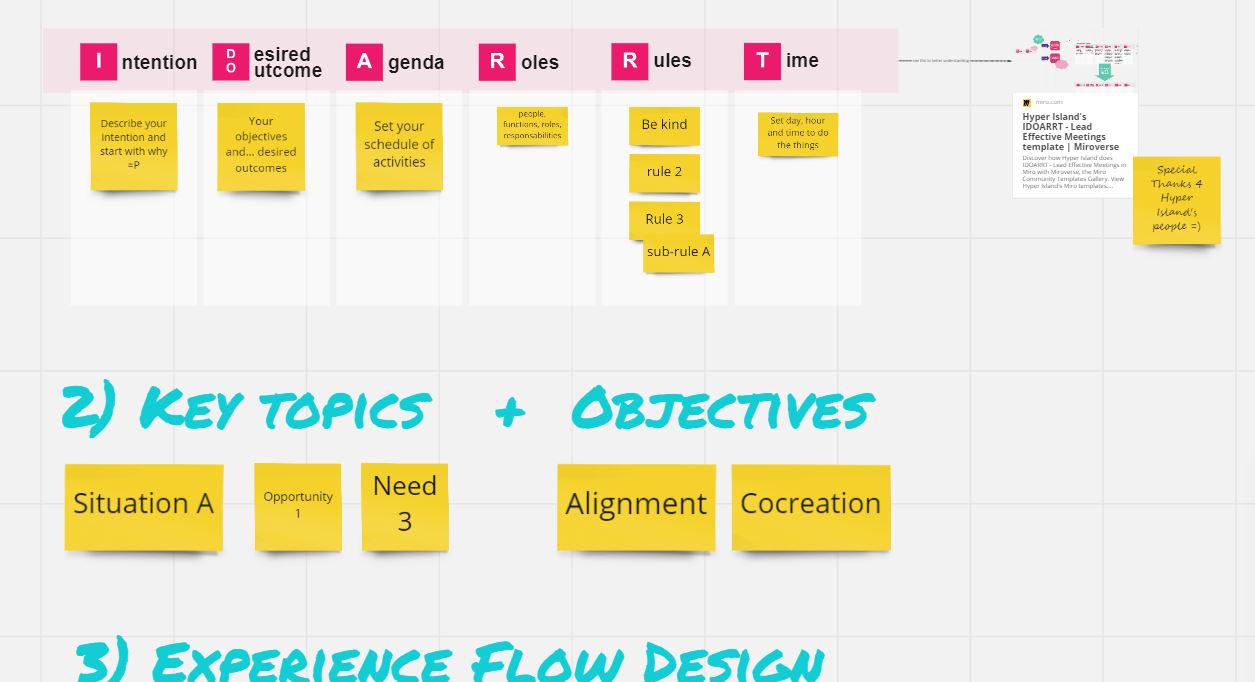
Built for planning sessions where nobody shares a room, which changes what a facilitator has to design for.
How to use it. Plan an interaction at least every ten minutes. In person, a group will tolerate a twenty minute stretch of talking. Remotely, attention goes to email well before that, and you will not see it happen.
Fixing a recurring meeting that is not working
These are diagnostic rather than planning tools. Reach for them when the problem is not one meeting but the pattern.
Meeting Mapping Template
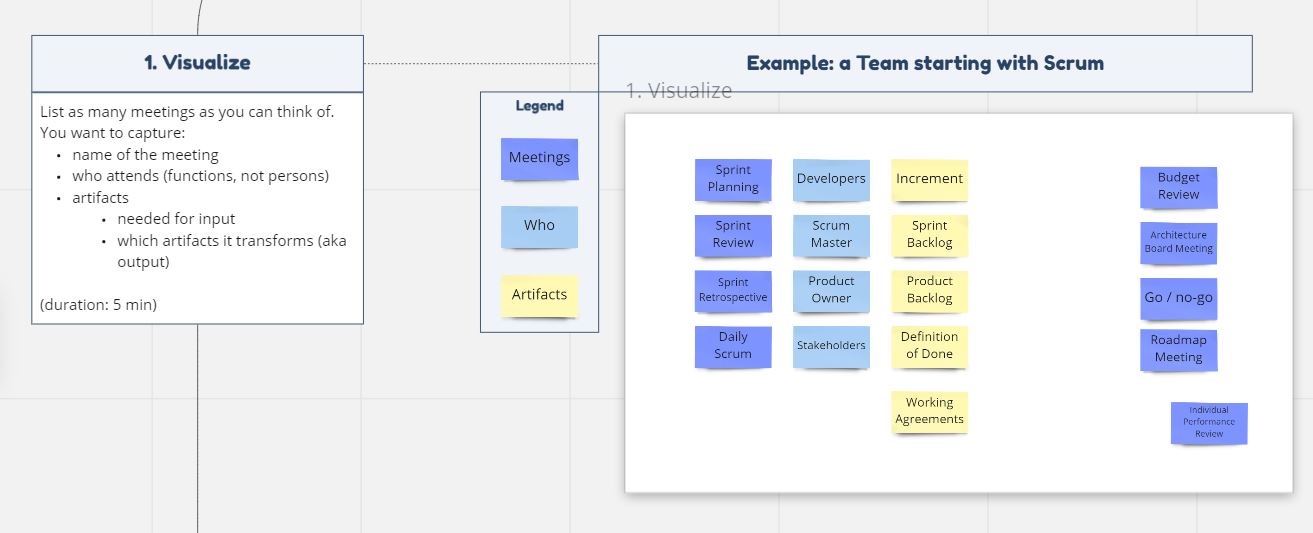
Developed by Agilar, this centers on understanding your meeting ecosystem. You start by visualizing how many meetings a team actually has, then organize them.
How to use it. Run it with the team, not about them. Seeing the full map of their own week is usually what makes people willing to give a meeting up. Presenting the same map to them as a conclusion produces defensiveness instead.
Meeting Legos
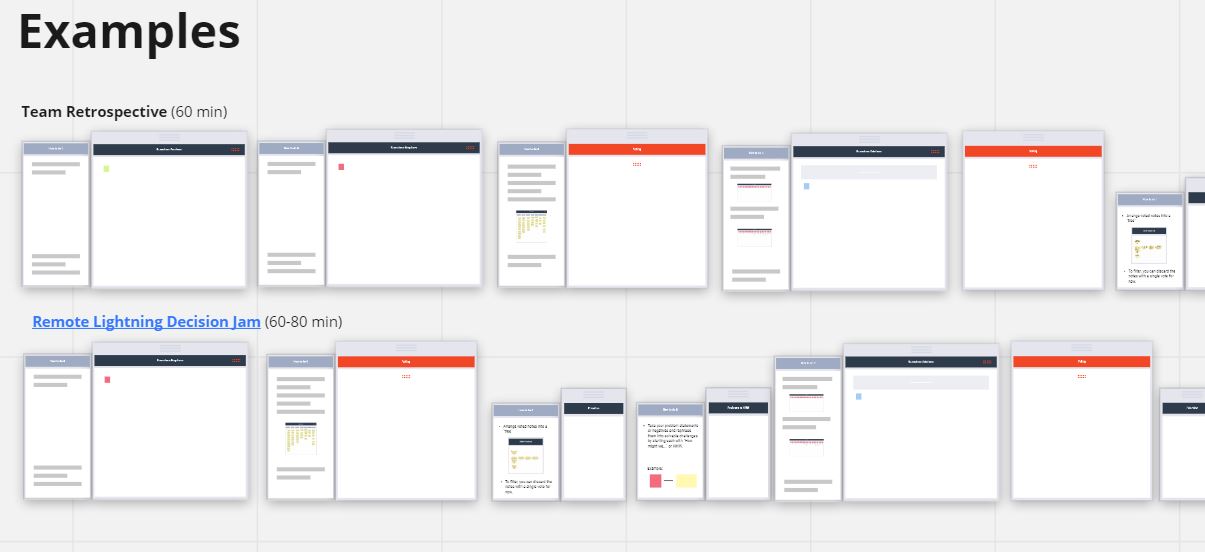
Treats meeting components as modular blocks you assemble into the meeting you need, rather than inheriting a format from whoever booked it first.
How to use it. Best for teams that have one meeting format applied to every purpose. Building two or three different shapes from the same blocks makes the point faster than arguing about it.
Template for Vital Meetings
Miro template for vital meetings
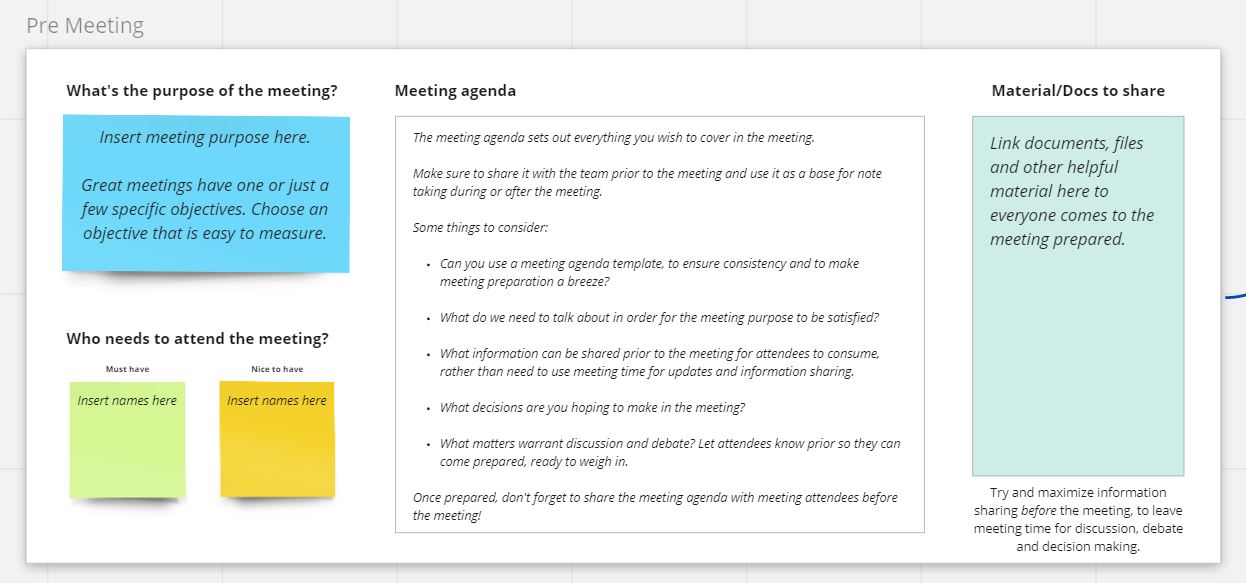
Focuses on what makes a meeting worth holding at all, which is a useful filter when a calendar has quietly filled up.
How to use it. Apply it to meetings you already have before applying it to new ones. The value is in what you stop doing.
Running a focused discussion
Lean Coffee
Miro Lean Coffee: Focused Meetings Template
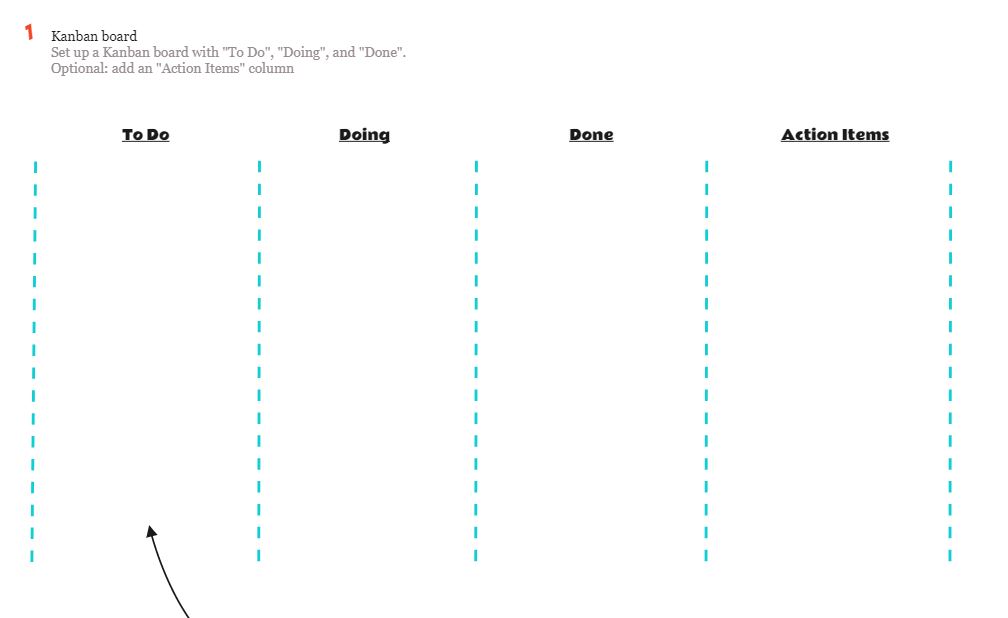
A structure where participants propose topics, vote on them, and discuss each for a fixed time before deciding together whether to continue.
How to use it. This is the best option when you do not know in advance what the group needs to talk about. The agenda builds itself from what people actually care about, which also solves attendance problems, because people show up to meetings they helped shape.
Team Meeting Agenda Template
Lucidspark Team Meeting Agenda Template
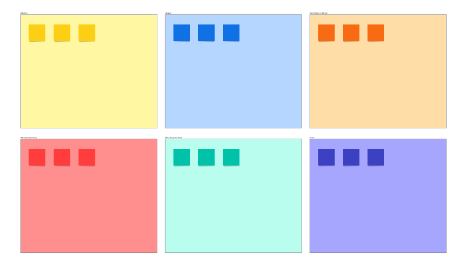
A straightforward agenda structure for a standing team meeting.
How to use it. Circulate it before the meeting rather than displaying it during. An agenda that appears for the first time on the screen is an announcement, not a plan.
Starting something new
Project Kickoff Meeting Template
FigJam Project Kickoff Meeting Template
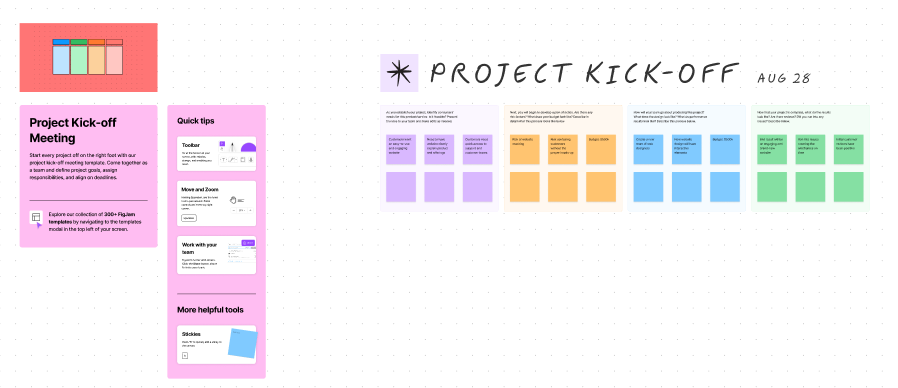
Covers the ground a kickoff needs: purpose, scope, roles, and how the group will work together.
How to use it. Spend real time on how decisions will get made, not only on what the work is. Most projects that stall later do so because nobody agreed who decides, and a kickoff is the cheapest moment to settle that.
Making the meeting worth attending
A template handles structure. These habits handle everything a template cannot.
- Write the outcome, not the topic. “Discuss hiring plan” is a topic. “Decide which two roles we open in Q3” is an outcome. Only one of them tells you whether the meeting worked.
- Send materials ahead and mean it. If people can read it, do not present it. Use the time for the part that needs everyone in the room.
- Open deliberately. The first three minutes set whether people participate. A short reflection or check-in question does more for the next hour than any agenda item. Our collection of reflection quotes for meetings is a good place to find one.
- Assign the owner in the room. Actions without a name and a date are notes, not commitments.
- Close by asking how the meeting itself went. Two minutes, occasionally, and the format improves on its own.
More meeting formats
If you are looking for something more specific than general planning, we have templates for particular meeting types: stand-up and huddle templates for short daily sessions, and agile sprint retrospective templates for looking back at a cycle of work. For designing a longer session from scratch, see our guide to designing workshops that engage.
Learning to facilitate, not just to plan
Templates get you a well structured meeting. What happens inside it still depends on facilitation: reading the room, handling the person who will not stop talking, deciding when to push a group and when to let a silence run.
Those skills are learnable, and we teach them. Our facilitation workshop builds them through practice rather than theory, and the train the trainer program prepares people to lead sessions across their own organization.
Tell us about the meetings your team is struggling with and we will suggest where to start.
Disclosure: the Miro links above are affiliate links, and if you start a plan through one of them we may earn a commission at no additional cost to you. We have been paying Miro customers for years and it is the tool we work in. The other templates here are options we researched and thought were worth sharing, not tools we use daily.